This short guide sets out a few key tips to inform the art of being a Gamemaster (GM), particularly in the context of a one session game at a convention. First pass thoughts were presented on my podcast, which if you want to listen to my dulcet tones, can be found here: https://creators.spotify.com/pod/profile/first-age/episodes/Being-a-Convention-Gamemaster-e3agt57
I received some feedback on the episode, which I have incorporated into this text based version of the guidance.
Inevitably, any such glittering nuggets of genius will be informed by the play style and types of game that you are running. These thoughts should be read in the context of a traditional roleplaying game, with one GM, presenting a prepared adventure to a group of 4-6 players, and responsible for facilitating the progress of the game to a conclusion within 3-4 hours. There are lots of styles of games, where these criteria either don’t apply, or only weakly, yet elements of the guidance below can be applied across the full range of games.
The Role of the GM
GMs bring the core experience to RPG convention events. As session facilitators, providing the game premise, rules, pre-generated (or semi-generated, or quick generation method) characters, plot startup and potential scenes, and overall session management, a player’s likelihood of enjoying a great RPG is much more likely if their GM is actually good at running a game. That doesn’t mean that all the responsibility for a good time rests on the GM alone; everyone is a player and responsible for the fun around the table.
A fairly standard ‘traditional’ GM will present the setting, situation, other characters, opportunities for drama, and guide the adventure using the game rules to support the action. Roleplay and Game. As GM you will typically round the adventure off with some form of denoument that provides a satisfying ending or, if time is pressed, a tantalising cliffhanger. It’s incredibly rewarding to run a great RPG session, especially with people that you don’t know! The role of GM seems intimidating, as there seems to be so many things to think about and, well, ‘master’. However, the reality is that just about anyone can be a GM.
Some games may be presented with situations and characters that are more completely realised by the players collaborating or pulling against each other. The GMs role in this type of game would be to help adjudicate outcomes, provoke new situations and shape the narrative so that all the players are actively engaged. In full co-operative mode, some games have everyone play the dual role of player and GM throughout.
Your most important attributes are not detailed rules mastery, intricate adventure plotting, depth of rich scene descriptions, incredible voice acting, or beauty of your table set-up of maps and figures, dice mountains and table snacks. All of those things are great, but what you mostly need is an open disposition, with an ability to listen and respond to your players, to ask questions, and draw out the fun of situations that players will, at least in part, manage to get themselves into all on their own.
This short document will give some guiding pointers to the craft of being a GM. It cannot be definitive, and will signpost you to other weightier and worthy places to learn more. Hopefully, as a relatively short guide, this will be a decent place to start, or opportunity to recap, on your lifelong journey as an RPG gamemaster.
Safety
When running games in public spaces, like RPG conventions, with people that you don’t know (and arguably with people that you think you know), it is either mandatory or strongly recommended to use some known, simple, safety tools to help ensure that everyone feels comfortable throughout the game session. Conventions are inclusive, welcoming and friendly to everyone. Many conventions will have codes of conduct or behavioural expectations, with advice on how we should act and what the organisers will do if there are any breaches.
Due to the open nature of the discourse in RPGs, we cannot entirely control the content. As such, it is quite possible that something might crop up in the game that could make someone feel uncomfortable, strongly affecting their enjoyment of the game. To provide consistent processes to manage this, there are a set of commonly understood tools available for you to choose from. These can be found here:
You will find that today’s conventions expect the use of safety tools. As much as we might like to think that everyone that sits to play your game is going to be ‘nice’, abiding by basic rules of courtesy and respect, that isn’t guaranteed. Safety tools provide a neutral medium to facilitate this behaviour and keep everyone feeling safe. As a minimum, learn how to use ‘Open Table’ and the ‘X-card’ at your table. The available tools are all ‘codified common-sense’ and very easy to use. Broadly, safety tools are either designed to understand any players’ concerns about possible content up front, to give the group a consensus to safe play, or they provide an in-game method to respond to discussion content that makes someone uncomfortable.
Understand the expectations of the convention, decide which tools you are going to use, learn how they work, what they do, and be ready to take the time to explain this during the opening of your session. One of the advantages of using common tools is that, over time, more and more players will be familiar with them, what they are for, and why they are important. Some tools, like ‘Lines and Veils’ even benefit from being used and shared with the whole group in advance of the convention taking place, if that is possible.
Most conventions will provide you with a method to pitch your game with a title, game system and short description. Some conventions will also give you space to provide helpful ‘tags’ that give prospective players some clues to the content, aims, themes, or subject matter (safety) (CATS) of the game. It’s good practice to provide these as a shorthand on content. Here are some good ones:
#Beginner friendly, #Mature Content, #Player vs Player, #Horror, #Violence, #Conflicting agendas
None of these replace the need for safety tools, but they help a player make a decision. ‘CATS’ is also a safety tool, and well worth checking out.
In the podcast I stray from the script here, and observe that the practical implementation of safety tools at GM’s tables is patchy at best, suggesting that fumbled lip service is paid to safety tools. Feedback suggested that we may simply not know what “good” looks like. It may be lip-service, or it may be that what looks like lip-service might be exactly right. The tools are so rarely used that it’s hard to know. It’s also true to say that we typically only hear the horror stories about games that go wrong, with few if any instances relayed of a game where the safety tool worked.
Although fallible, it is important for a GM to be able to judge appropriate content. A GM who cannot “read the room” risks more trips and falls in the process of running games. You should also consider the time of day your slot is running. Fewer people want guts and terrors at 10am than 8pm. Perhaps consider spicier games to run in the evening slot. If your game is more graphic, and you have some flexibility on table location, choose a more secluded table.
Safety tools have that survivor bias thing. If you have the X-Card in play and nobody used it, then it has actually done its job. The X-Card presence is to signal to players that they CAN stop the game if they need to, perhaps to edit out content that we didnt think about in lines and veils.
Further advantages of the X-Card is the way that its presence provides the self-policing natural counter to some of the ‘But my character would do that…’ tendencies. In the end, it moves the energy of tone moderation from the GM to the whole table, by giving everyone explicit permission to voice concerns, albeit usually in a jocular fashion.
Also check out Fiasco’s “Let’s not…” card, which is their version of an X-card. It does the same thing but is much easier to explain and understand.
It’s an imperfect world.
Know the Convention
RPG conventions have differing expectations. This might be on behaviour, safety expectations, escalation procedure, session duration, communication with organisers, attendance tickets, preference on types of games, and GM rewards.
Take time to understand how the convention runs and what is expected of you.
Know the Game
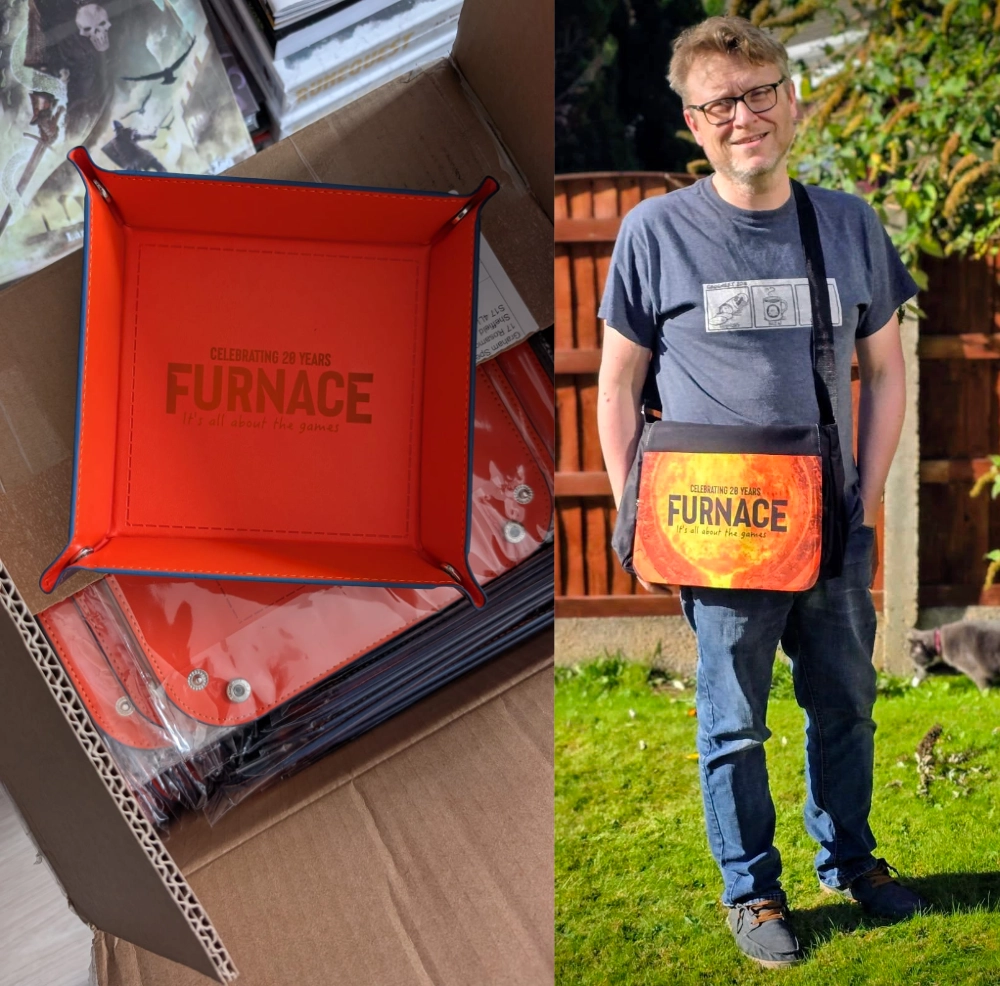
Run a game that you’re familiar with and that YOU want to play. Don’t worry about what other people are looking for, prepare and pitch something that really speaks to you. At Furnace 2025, a small weekend convention of 100 people, there were more than 50 different game systems offered.
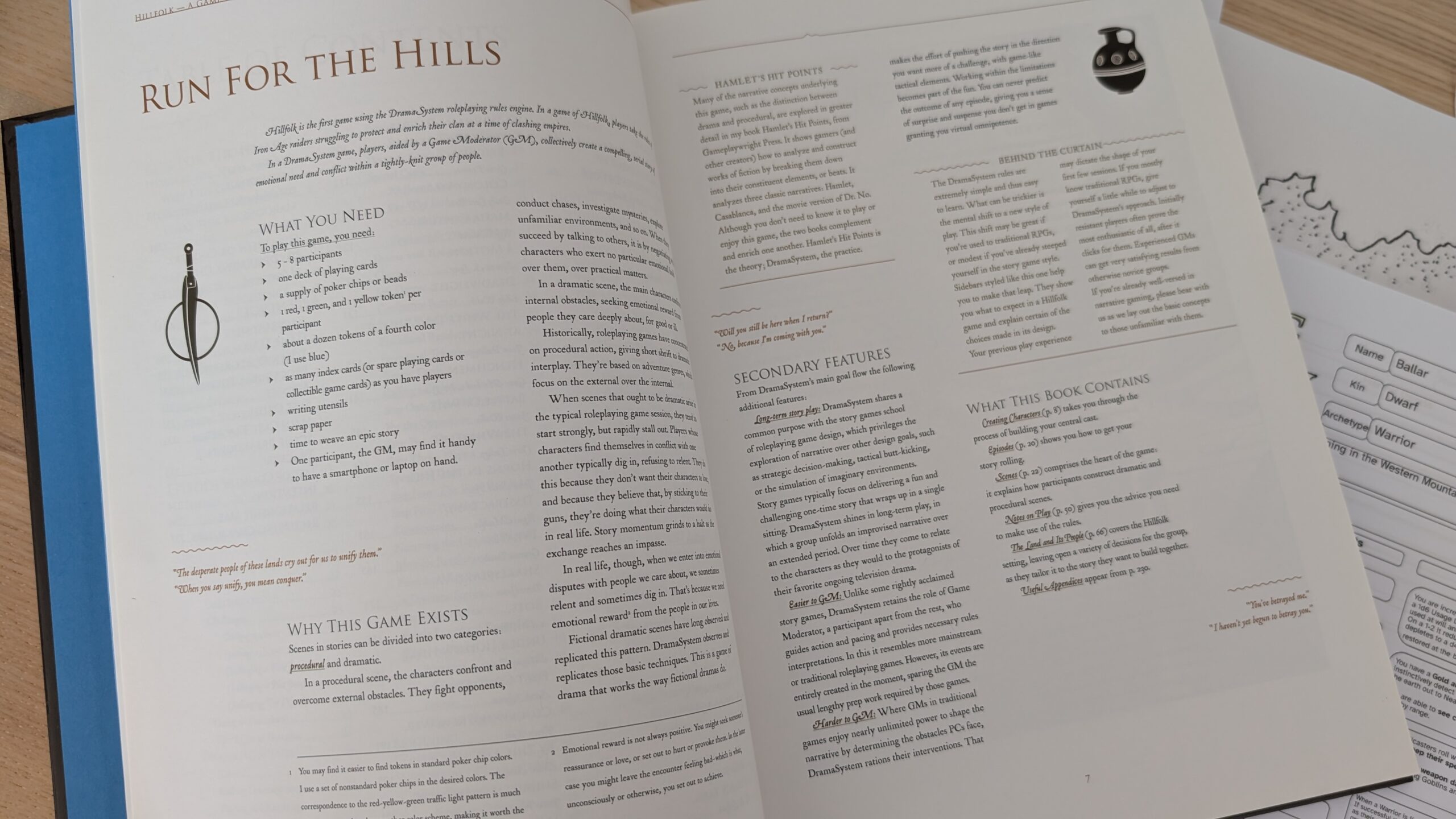
RPGs have game rules that structure play and inform dramatic outcomes. As a minimum you should have a good grasp of the game rules that will be used in your presented situations, dramatic scenes or plotted scenario. Players often come to conventions to try out games, looking for a good grounding as to how they work. Some flexibility, or considered simplification, of particular game rules, especially for more complex systems, is fine, if signalled and justified, but ‘just make a roll’ or ‘I play fast and loose with the rules’ is just poor GMing. Play the damn game. There are lots of great RPGs with very simple rules, over not many pages, so there is something for everyone.
It’s also fine to make mistakes. If you are new to a game system, or it is quite an involved one, or your head is overstuffed with similar games, it is quite possible to get some rules wrong. This is unlikely to matter too much if you’ve done the work to understand the structure and intent of the game rules. You may also find that you have some system experts around your table. Ease and share the load by referring to their expertise. The GM does not have to be the sole arbiter of the rules.
More than rules, games often come with a core premise, expectations on the style and rhythm of play, what player characters in the game are expected to do, how they should behave. Beyond your mechanical rules mastery, seek to run a game that lives and breathes the game’s expected premise. You should find that the game rules support the action in the adventure if you do.
Know the Scenario
Whether you are running a pre-written adventure, or one of your own, make sure that you thoroughly understand the text, the beginning, perhaps the middle, and have considered a number of possible endings. Your adventure could be anything from a flexible network of potentially interconnected scenes, a limited network of strongly joined scenes, character-led objectives with improvised scenes or anything in between.
However your session is structured, it is more likely to be fun if you both know it and not hold onto it too tightly. Placing player characters in situations and giving them meaningful choices can take the session in a number of divergent paths. Where possible, roll with your players’ decisions and the consequences of them, though also note that players typically understand the constraints of the convention session form and are wanting to have a fun time with the material and situations that you have prepared.
Timekeeping
Time flies when you are having fun!
Convention session structure used to be set as a standard duration of four hours with an expected six players. Conventions now have a range of session durations from a short demo hour, ‘games on demand’ two hours, or convention slots of three, three and a half or four hours for four to six players. More unusually, some conventions provide scope for games that last two slots, or even whole weekends at LongCon. You can fit a fun game into any of these sessions.
Plan the content of your game to fit into your session duration. If you are able, test run your game before presenting it at a convention to check content and pacing. Every session, even of the same game is different, and online play has its own dynamics, so a test run is just a useful guide. Generally, you should plan for less, as players will often fill any scenes, or spaces between scenes. There is never a good reason to overrun. Your players will have lots of other things to do once your session is over, so it is poor practice to assume that you can overrun.
Several typical types of scenes can eat up a lot of your game time, for marginal or no benefit. Aim to keep your game setup talk to a minimum. Once you have covered ‘safety’, perhaps something on ‘CATS’, passed out characters and the briefest of rules introduction, you could easily be half an hour into your session! If you have pre-generated characters, get them allocated quickly, pushing along overly polite players who all want someone else to pick first (a classic British trait). Establish any dice types needed and perhaps a quick overview of the game’s core mechanic as players are looking at their character sheets. Get to the opening scene as quickly as you can.
Strategic planning and combat can really eat into your session time. Depending on your adventure that can be fine, and on point, but note that these scenes can drag, so be vigilant on your time keeping.
If you need to push things along, summarise planning options, or decision points, and ask the group which they wish to take. If a location has no further clues or areas of interest, it’s fine to say that the location has now been cleared, and ask what the group wants to do next. If you find a combat scene is taking too long, then make use of morale to curtail the fight. Foes should rarely want to fight to the bitter end.
Take planned breaks during your session, in addition to an ‘open table’. Confirm this at the beginning of your game. As a minimum have a mid session break of 5-10 minutes, but also others depending on the needs of the group.
If your game has come to an enjoyable and satisfying conclusion before the end of the session time, then it is fine to finish early. Although the game should last a reasonable duration, to give everyone a sense of immersion in the experience, no-one is going to complain if the game has been good fun and wrapped up with half an hour still to go. You should never feel under any pressure to pad out the session to fill your quota of time. If timekeeping has not worked out and you look to be overrunning, then draw the strands together in the last ten minutes and finish on a cliff-hanger if necessary.
Note however, that some conventions persist in providing GM rewards on the basis of the number of player hours that you have provided.
Spotlight Sharing
At the beginning of your game have each player introduce their real world self and their character. Just as people are different, you will find that you have lots of different types of players at your table. Some will be self starting, keen to play, and may even inadvertently dominate your session in all the scenes. Others will be quiet, and either happy for others to take the lead, or lack the confidence to participate as they would like. Some will stay focused on the in game action and characterisation, others may struggle to stay with the game. Spotlight sharing levels this playing field.
Seek to give every player opportunities to come to the fore, to take actions, make decisions or provide suggestions, speak as their character, pursue their goals, lead a scene, or make use of their character’s signature abilities. Move this spotlight around the whole group as much as you can. Good players will also be looking to draw others into the action.
If a GM is doing most or all the talking in a one shot session, then something is wrong. Lengthy game explanation, essay scene descriptions, and non player character spotlight dominating or monologuing, is a sign that you are all playing a solo game with a superfluous audience. A good game will give players agency to make meaningful choices and influence outcomes. Although the spotlight should also fall on the GM, ensure that everyone gets the opportunity for a proportional share. Spotlight sharing helps to give every player a sense of purpose and participation in the game.
Bling
There are some basic extras that you should plan to have ready for your game. Much as you may expect players to rock up with their own dice and maybe a pencil and paper, long experience tells us that this may not be the case. Have some spare sets of dice, scrap paper, pencils and an eraser ready to go.
Prepare some method for the players to present both their own names and character names to the other players. This can be as basic as some folded cards, through to plastic A5 menu holders with character pictures and names on the table facing side and possibly other information on the player facing side.
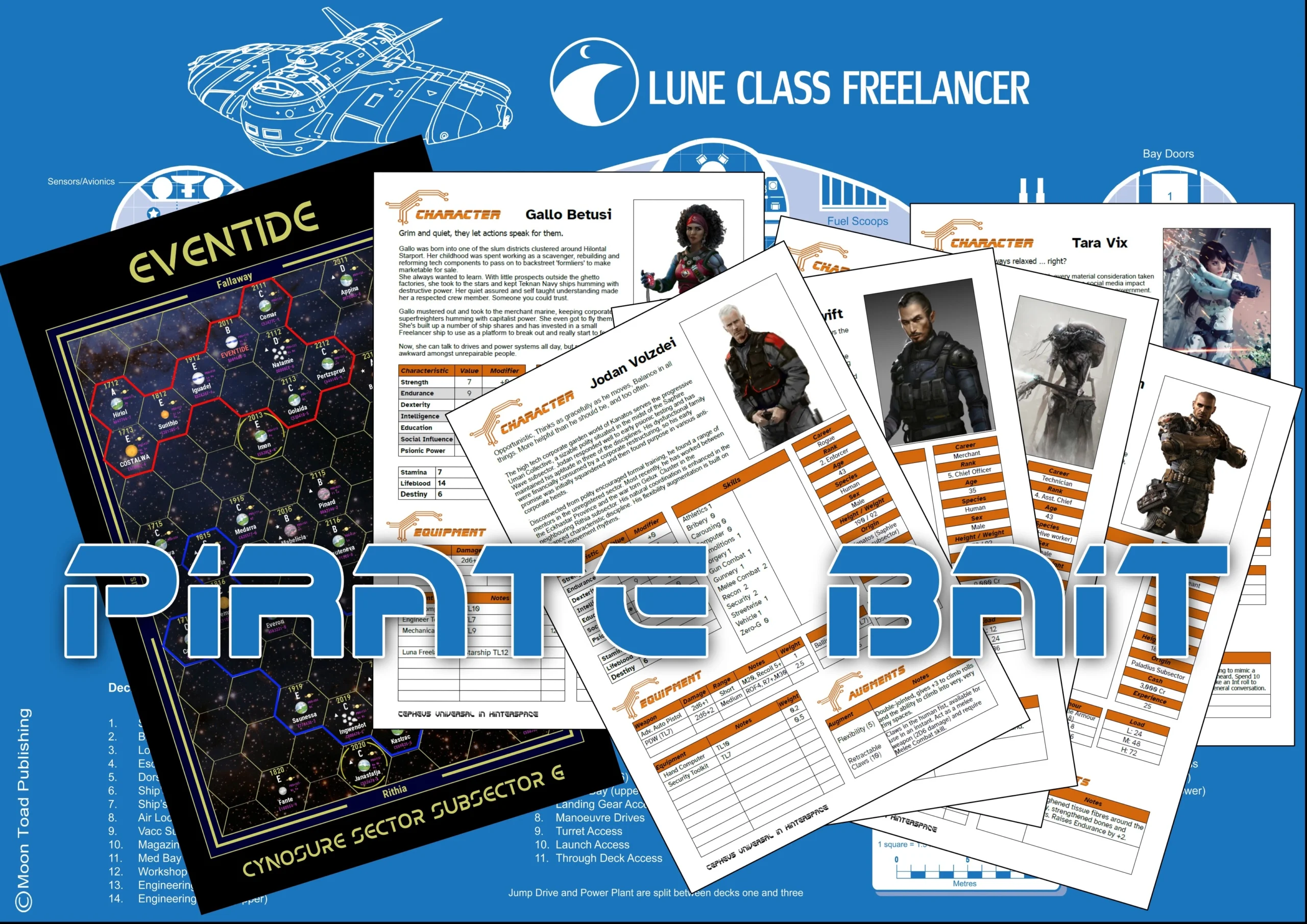
Depending on the nature of your game, any other prepared materials are nice to have but not necessary. ‘Bling’ such as maps, scene and non-player character pictures, props, themed dice trays, battlemats, scenery and figures, can really add to the game experience. Bling crafting can be fun to do. However, the bling is not the game. Beware ‘bling envy’. A heavily blinged up game might not actually be very good in imaginative play, while a bling-light affair might well be the most memorable game of the convention!
Convention games are generally played in shared spaces with other tables, so you may have to curtail sound effects and music as being too disruptive to other surrounding tables.
If you are lavishing your game with bling, be aware of any rules about bringing food and drink to the table. Usually drinks and snacks are all part of the established culture of play. Accept that any bling placed on the table will be sloshed with sticky beverages or torpedoed with spicey sauces. Keep your hallowed irreplaceables for display only.
You can’t please all the players all of the time
This one is quite important, and often forgotten. Always remember that whatever your energy, enthusiasm and skill, it is quite possible that what you present, and the style of game that you run, simply might not work for all the players that sit at your table. It’s important to remember that people bring their own expectations and play preferences. Everything in your game might align, but quite predictably, they sometimes won’t. The key take away here is that this is not a reflection on you as a GM or the quality and potential of the games that you run. You really can’t please all the players all of the time. So be kind to yourself and recognise this.
This may also partly explain why, when you run a particular convention game more than once with different groups, one game goes really well with a buzz around the table, and with another group it falls a bit flat. There are, of course, myriad reasons why this might be the case, but the preferences and expectations of players can account for some of it, and these are beyond your control.
There is a craft to being a good player too. You might not get very good, aligned or engaged players.
Nerves
Even if you subscribe to the view that the responsibility for a fun session is shared between all the participants around the table, it is fair to say that you, as GM, will play a pivotal role. Whether you are a first timer or an old hand, it is quite understandable for you to have some nerves and anxiety in the lead up and during your game session. As with so many facets of life, having some nerves can be a good sign and a positive driver.
We all manage anxiety differently. Good preparation for your game will help you to run it well in the session. If you find that you are still preparing a game that is ready to run, then this is usually an attempt to manage anxiety and nerves. Remember that your players are already there to have fun, and to make the most of the situations and characters that your game presents. You don’t have to ‘win the room’, they have chosen your game from the system, blurb text and tags. They are already with you.
Not every game is going to be a riotous success, and that’s OK! With good preparation, application of some basic GM good practice techniques, and space for the game to breathe with your players, you are all going to have some fun creative times together in your shared imagination space.
Many of the best conventions are warm, inclusive, and welcoming. If in the run-up to the convention you have any questions or concerns, you will find that the RPG coordinators will be there to help and support.
Anyone can be a GM. It really isn’t as difficult as this guide might make it seem! Take small steps and give it a go. Being a GM is a lot of fun and extremely rewarding.
Always Learning
The best GMs recognise that they are always learning. Maintain an open and inquisitive attitude to your GMing. If you do, over time, you will improve in your craft, and better understand your own style and preferences as a GM.
Conversely, the fact that someone has been a GM for forty years doesn’t guarantee that they know what they are doing, or are very good. So, an ‘old hand’ also needs to be someone who thinks about how they GM, how their games are presented, and welcomes constructive feedback.
One of the best ways to learn about being a GM is to play lots of games and see how others do it. You will find many practical examples of techniques, table management, safety, spotlight and time keeping – the technical side of GMing. If you are a ‘forever GM’, use conventions as an opportunity to be a player too.
Play the games that you enjoy. Seek to improve and deepen your understanding of the game systems that you use. Having a strong game system knowledge is great for confidence, and speeds up play in your session. For some more complex games, your system knowledge will continue to grow over time. You will also understand how to tailor the game for a particular session, and how its rules and premise will support pivotal scenes in your scenario.
‘Stars and Wishes’ is a positive technique to get constructive feedback at the conclusion of your game session from everyone who has played (including you!). A star is first awarded by each person in turn for great moments in the game, be it character play, descriptions, moments of generosity, supporting another player, rule memory or tactical brilliance. Wishes are then given for something that a person would like to see for the next time. This could be something drawn from the interactions between characters, outcomes of scenes, rules that were applied, or in the way that the game is run. There is also a stronger version called ‘Roses and Thorns’ that opens up for more critical feedback. If you wish to use this technique, then plan for a ten minute period at the end of the game that still keeps you within the overall slot duration.
At conventions, if a player exercises the right to leave the game early, for whatever reason, it is worth asking that you can have a chat afterwards to see what the issue was so that it can be looked at, even if it’s just a mismatch of expectations. You can learn from when things don’t go so well for someone.
GMs want to run the most intriguing, entertaining and memorable games that they can. There isn’t a competition between GMs. Sometimes your games will sing and be brilliant, at other times they will just be OK. You’ll have your off days.
Stay open, keep learning, enjoy your GM journey.
Summary
Running an RPG at a convention with a small group of people is hugely rewarding and great fun. Anyone can be a GM. Try it and see if the process of preparing and presenting a game brings you joy. If it does, then do it some more!
Like many endeavours, there are techniques that you can learn to help you be a good GM and present engaging games. Recognise that you will always be learning as you continue to present games, finding out a little bit more about yourself and the games that you enjoy as you go.
Not everyone will care to be a GM, but if you want to try it, then allow yourself a little preparation, perhaps starting with close friends and then branch out. Play to find out. If you are an experienced GM, stay open to how you run sessions, and recognise that as we change with the passing years, what we are looking for in our gaming will change just as the available games, styles and expectations of play are also moving around us.
As a GM or player, enjoy your gaming!
- Listen and respond to your players.
- Take time to understand how the convention runs and what is expected of you.
- Know your material.
- Understand how to play your selected game.
- Keep to time and do not overrun.
- Take breaks during your session.
- Move the spotlight around the players so that everyone feels involved and engaged.
- Have ready spare dice, pencils and paper.
- You can’t please all players all of the time.
- It’s fine to be nervous.
- Everyone is there to have fun
- Keep an open attitude to your GMing and recognise that you are always learning
- Play games and find out how others GM
Some other places to find out more
This guidance introduces some of the techniques and mindset that will set you on your journey as a GM. There is a ton of great advice out there. Here are some links to other places you can go to find out more:
So You Want to be a Gamemaster? Justin Alexander
https://thealexandrian.net/so-you-want-to-be-a-game-master
Your Best Game Ever, Monte Cook Games
https://www.montecookgames.com/store/product/your-best-game-ever/
Return of the Lazy Dungeonmaster, Sly Flourish
https://www.drivethrurpg.com/en/product/251431/return-of-the-lazy-dungeon-master
How to be a Great GM, Guy Sclanders
https://www.youtube.com/@HowtobeaGreatGM
Burn After Running, Guy Milner
https://burnafterrunningrpg.com/
Safety Tools
https://www.dramadice.com/gm-tips/safety-tools-for-tabletop-rpgs/
https://ttrpgsafetytoolkit.com/
CATS
https://proleary.com/games/the-cats-method/
Stars and Wishes
https://burnafterrunningrpg.com/2022/01/07/stars-and-wishes-because-feedback-is-hard/