Hinterspace Notes #4

 I’m continuing to enjoy the background process of shapng the Hinterspace setting for Cepheus Deluxe. To keep me motivated, I’m using the notes and images I have created as the setting for a convention game this year.

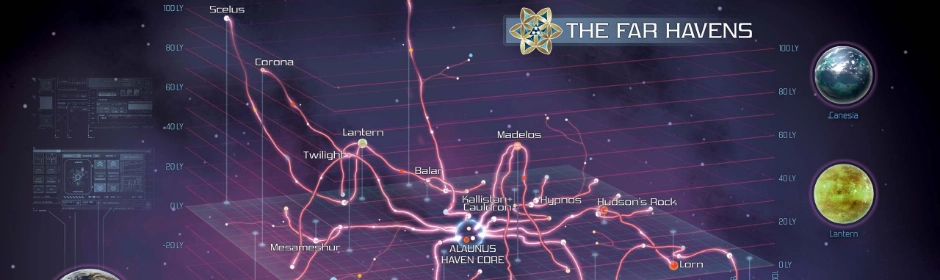
I’ve taken one subsector, Eventide of the Cynosure Sector, and started to map it out,

Each world will be created and mapped to provide some rich setting material for play.

Here is Eventide in good old booklet form.

The scenario will be centred in the Mabelicia system.

Much more to do, but the process is fun, and I am getting outputs to the table, so it will be used to create some fun games early in the development cycle. A scenario will also be useful to add to anything I might manage to publish.  

Posted in Cepheus, Hinterspace, Traveller, Writing | Leave a comment

Chivalry & Sorcery 2nd Edition

This game was my jam in the mid Eighties. We were early adopters and actually gave it a proper go. The idealised feudal detail, with castles to manage, and the societal structures, reflected a ‘realistic’ amount of detail mirrored in the mechanics. The game was a classic of Ed Simbalist (and Wilf Backhaus), with specific and tailored rules for each step, and not much that unifies everything. But the sum of the parts made a very complete whole, producing a blow based tempo to combat and a detail of enchantment to the magick. The tolkienesque layers did little but encourage me!

The question is, do you go back? Indeed, can you go back? Ed was Edmonton, and Wilf was Calgary, two Canadians. Well, with my imminent flight to Calgary forthcoming, it just seemed right to start to dip my toe back into those fantastical gaming waters.

The lightest of skims bring back memories locked to a time when this game was the favoured centre of my gaming. In fact it was an important game and escape in the late 80s. The game itself exudes a medievalist flavour, with all the varied systems buzzing along as I had remembered. The challenge will now be to get myself to a point where I am on top of the ‘fidlly bits’, such that I can run the game. I know I can get there and, as an exercise in ‘gaming history recovery’,  the preparation and offering of this, probably as a one shot, will be a fantastic journey.

I’ve been on a quest to find legit PDFs of the game. they are, for lots of straightforward reasons, nowhere to be found. I also struggled to get good scans of the two page character sheet. A quick message to the wonderful Britannia Games and hoorah, I now have something I can work with. For those who are unaware of what I am taking on, here is a reduced image of the two page spread…

With a host of text boxes, forged in the fires of Affinity Publisher, I can create some legible character sheets for a demo game. You know, for all those people who feel they have missed out when C&S 2e was in its triumphant heyday. Er, oh, hum.

All this nonsense is only happening because I am now retired of course. Getting to that one off game will sink some serious time. Really, I should be streaming it, just to showcase it for the curious disbelievers. 😆  

Posted in Games | Leave a comment

Cepheus Deluxe Characters

 I’ve started creating Cepheus Deluxe characters for the convention games to come this year. The character generation is very simple and quick,  but the thought processes around the procedure are longer and require more invention. That’s pretty much how it should be.

Tara Vix is back…


Of course I have modified a little around the edges, creating a Diletannte career, that wasn’t there in Cepheus Deluxe, and modded a weapon and armour between the book’s offerings. There are a few less skills in Cepheus Deluxe vs Mongoose Traveller, but they are broader and the Level Zero skills cover the necessary bases.

I’m staying with the official form fillable character sheet for now, but have suggested some improvements to it. It is entirely servicable as is.

One down and four more to go…

Posted in Cepheus, Conventions, Hinterspace, Traveller | Leave a comment

Games played during Quarter 1 of 2022


Twenty two in the quarter with two more sneaking in for this weekend, to give me 24 by close of this weekend. Will I make the tonne for the year? D&D 4e will probably dominate as I have much more I want to do with this game this year. D&D5e will last until the cursed Strahd does, which looks to be a fair few more sessions.

I’m playing in a discrete number of Darran’s Vaesen game, so that will show at about 8 sessions all in. Pathfinder 2e may feature some more depending on getting some oomph into the sessions to drive some momentum. I’d really happily play through an AP if it was offered.

If planning pays off, then I will see a good number of Conan 2d20 and Cepheus Deluxe games on here as I stretch Foundry’s VTT legs a little. Wayfarer may also get some play, if it manages to bloom from the early incubation stage. Conventions will also make their mark as retirement allows me time to play more games than usual.

Good start, well paced, more to come.  

Posted in Games | Leave a comment

Wayfarer – Hope in the Darkness

 Wayfarer is a working title for an RPG based on a blend of the Open Content in Sword of Cepheus, Cepheus Deluxe, and Of Realms Unbounded. A hopepunk fantasy of heroes that bring change for the better, saving, preserving and improving the prospects of communities in peril from great evils. What it lacks in moral sophistication it may gain with a broad brush of positivity, a sense that you, the player, can make a difference in a real world that conspires to prevent you from effectively doing so.

As projects go it is in early stages, not entirely confounded by two factors. One is that the name ‘Wayfarers‘ is currently in use for a 2012 RPG, that is still live and being sold on Drivethru. I expect that the similarity of the name may require a rethink at some point. The second is that there is a new Kickstarter that appears to be doing something similar: Westlands a 2d6 System RPG Core Book.  

Menagerie Press is creating Westlands, a 2D6-based fantasy RPG with streamlined mechanics based on the Sword of Cepheus open game license system reference document. The 2D6 fantasy system (Traveller, Sword of Cepheus) has a true sword and sorcery feel, allowing exploration and adventure in a savage land. Action resolution is quick, putting an emphasis on story, not rules 

In Westlands, we’ve taken the core open-license 2D6 fantasy reference material and are adding extra content, including reworked (more dangerous!) sorcery mechanics, optional rules for simple firearms, and an expanded bestiary. 

The name Westlands is a nod to the West Marches RPG campaign style, which is a much more free-form, adventure-seeking campaign where the players decide their motivations and goals, rather than being directed via the game master.

This looks to be very good indeed, so have backed and look forward to seeing what they come up with. There are signs that it may be furrowing a slightly different direction, with dangerous sorcery and firearms. I’m going for more pervasive magic in a high fantasy direction. I also want to instill geography, places, with some game affecting attributes. These would be:

  • Illume and Shadow. A place exudes the control it is under, the power that has strength over it. Poorly managed, oppressed or cursed, and the place will slip into Shadow. Activity that will support the community will be one difficulty harder (or maybe a DM scale of -2 to +2). The shadows will be deeper, resistant to the warmth of the sun. Conflict will prosper whilst individual health will suffer. Harvests will struggle with blight, and good trade will pass the place by. Many a location will be on a knife edge between Illume and Shadow, navigating the uncertainties of an uncaring world as best as possible. The heroes illumine the world arround them. Their deeds shifting whole places from the grip of dispair into a hopeful future. A place illumined will have good harvests, disease will struggle to take hold, children will be healthy and live into adulthood, tensions will ease.
  • Mana. Old pacts, ancient legends and the ballads of recent times shape the mana of the land. Mana weaves itself into the state of the land, supporting particular magics and welling up chimera that exudes the character of the magic of the land.
  • Location Qualities  – place descriptors that act as scene DMs which can be exploited if they contribute to an action in the game.
These are early form thoughts, and will be supported by the lightest of mechanical effects. I’m trying hard to go with the simplicity of the Traveller aesthetic, without trying to create a carbon Traveller Fantasy. In fact I diverge from the standards quite quickly. Charateristics are currently set as:
  • Strength
  • Endurance
  • Agility
  • Intelligence
  • Awareness
  • Charisma
These are supplemented with an optional ‘Mana’ depending on your character’s Heritage (race) or Calling (profession). I wil lbe going with a roll 3D and drop the lowest roll as the default, with some adds and minuses for Heritage. 
Other thoughts have created a skill list that works for me, at least as an initial draft. I’m creating some standard fantasy heritages with their own selectable Talents. Callings will have their own Talents, and there will be general ones to select. PCs will have three Talents drawn from these categories. Skills will be selected from Background, Calling, and a Group Pool. Calling Events are random, everything else is just selected.
Magic is currently based on ‘spheres’ that can be manipulated to create effects. As such they are freeform, with ‘spells’ created by the Mage, granting a +1 DM casting for the prepared nature of it. (Talislanta, I’m looking at you.)   
We are still looking at a Cepheus base to everything, so the core will be rock solid.
Westlands might do enough for me to shelve this. Or, I might find there are some of my ideas that I want to syphon into that game. I think a reasonable goal is to have enough, in good enough shape, to be playtestable, if not publishable. If I can manage that then getting it out there for some play could happen this year.
Hope this sounds of interest? Let me know what you think?

Posted in Cepheus, Traveller, Wayfinder, Writing | Leave a comment

Emergent Campaigns

 There has been some discussion in the podverse about the term ‘campaign’ in a roleplay game context.

  • What is a campaign?
  • How up front do your goals for a campaign need to be?
  • How planned in does the framework need to be?

I’d like to write a bit about emergent campaigns, how sometimes, long form play can ‘well up’ organically from simple beginnings.

Perhaps I am focusing somewhat on time just now as I have retired this week, but I really think one of the most important considerations when you are thinking about a multi-session game that you want to run, is how long you really have to play it through. The most valuable thing any of us can give is our time; it is a resource that we should treat with respect and courtesy to those in the group that are offering it to play. Up front, having a view on the estimated elapsed time of the game, is important and will help shape what your ‘campaign’ will be.

But what is a ‘campaign in this context? It’s an old name which evokes a range of definitions:

Cambridge Dictionary would say:

a planned group of especially political, business, or military activities that are intended to achieve a particular aim:

Or, more simply…

to organize a series of activities to try to achieve something.

In the roleplaying game context, a ‘campaign’ is an old name for well, something, and I suspect probably not necessarily for what we now think of as a campaign. A recognisably contemporary description will involve a sequence of adventures, possibly with an overarching theme or linked goal, with a continuing roster of players and characters. A play sequence where the characters grow, both in terms of game advancement, and in their shared relationships, their own stories and affecting change to the setting. A moment in time where the shared stories of the characters changes the story of the setting in which you play.

A campaign may well also have plot, events that take place either with and influenced by the story, or independently of it, as the verisimilitude of the world shimmers with the glamour of a real other place. 

It could be, and despite my forty years I’m not positioning this view definitively, that the early meaning of the term is much more about a perpetuating setting, which can be interacted via a series of groups of players, and that there can be swap-over of players and characters as the campaign progresses. So, less about one group story, and instead a story of a setting and the more improvised interactions of multiple groups within it. This might even explain some of the early design of D&D and why the emphasis was placed where it was.

Perhaps the current Westmarch style of game, where a large roster of players self determine points of interest and self organise sessions to play, cleaves closer to the original definition of ‘campaign’. Language is fluid, and has a way of making sense within the context of time, so I’m not going to flap about exactly what the term means, and I think others have encapsulated the things that make a campaign over a series of adventures.  

I’d like to write about campaigns based on my journey of actually running one, the one that I am running right now. 

We’re 35 or so sessions in, with more than a year of elapsed time, one group, with one change of a player throughout. I didn’t knw that was what to was going to be when I set out. The themes that I wanted to explore emerged during play and were inspired by the suggestions laced throughout the gaming books I was using and the interaction around the virtual table.

I started my journey by finding a heroic fantasy game full of passion, that put the player characters in the centre and clothed them with cinematic powers of high fantasy, setting them in a Points of Light environment where ‘The World needs Heroes’. 

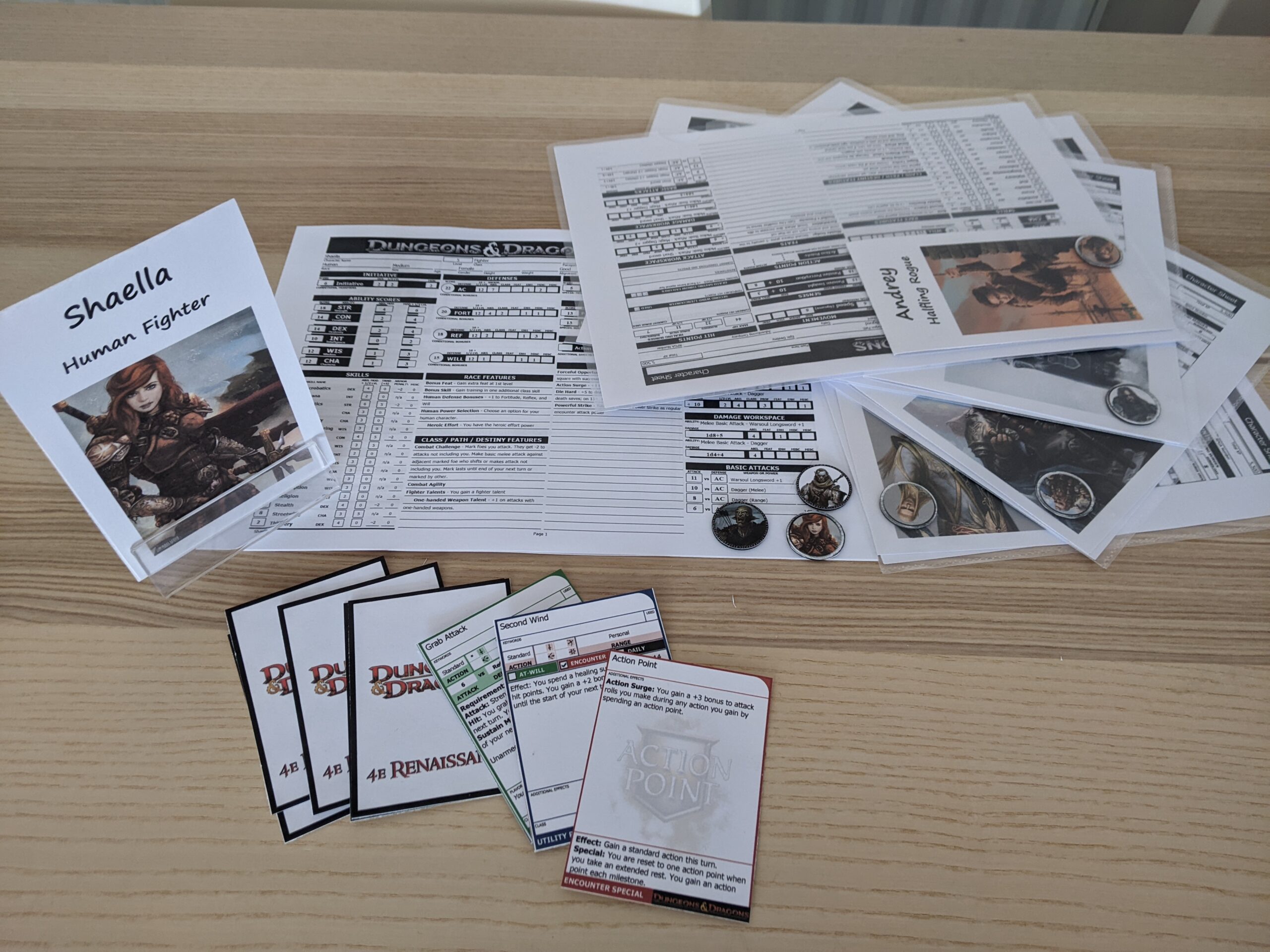
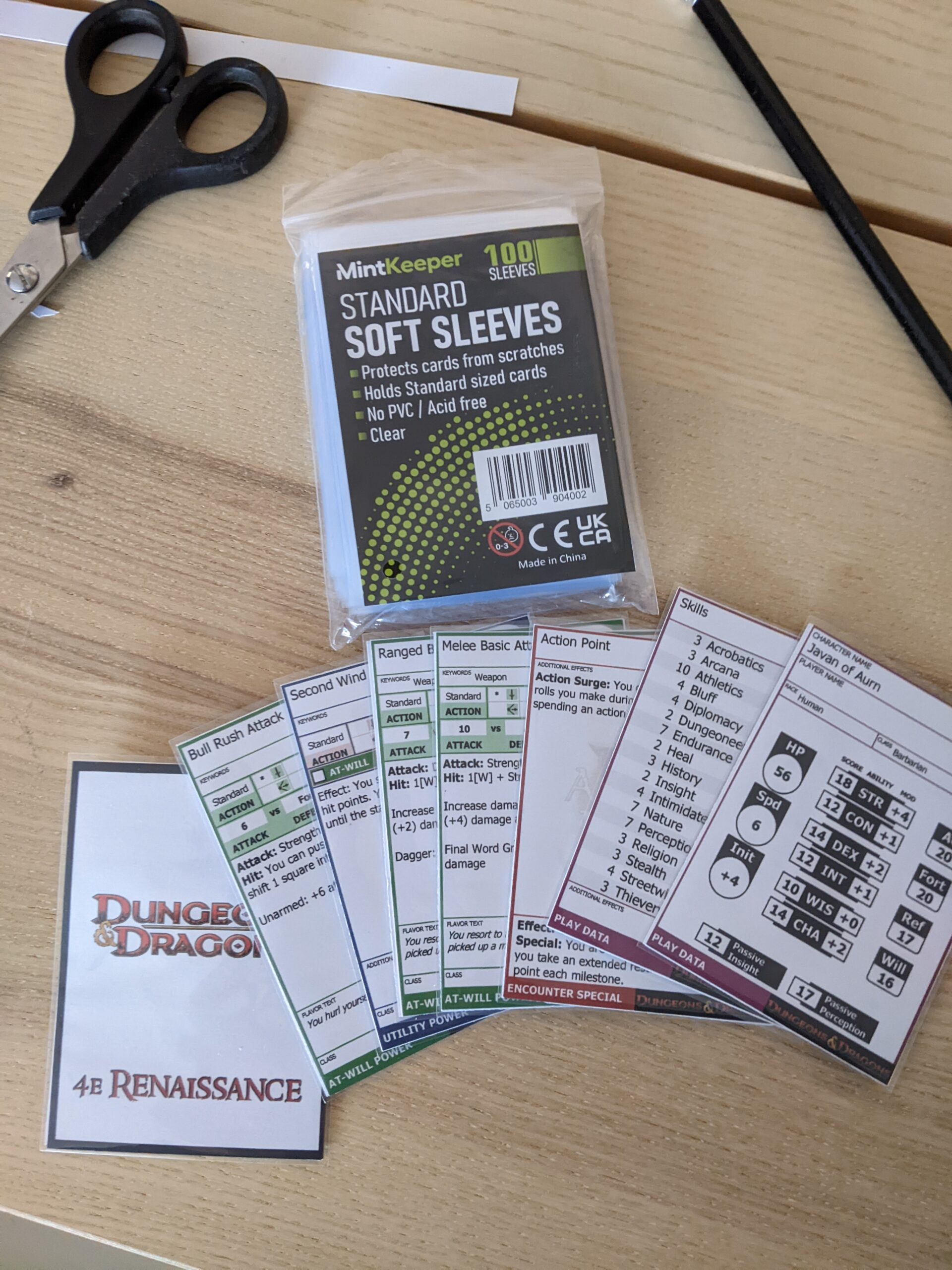
The first vehicle for me was a strong retail interest and investment in the 4th Edition of Dungeons and Dragons, which I then felt I needed to justify with some actual play. I was genuinely interested to see how the game would play out at the virtual table.

So, I didn’t start with an overarching metaplot or any notion of how long the series of games would last. I just wanted to give it a go.

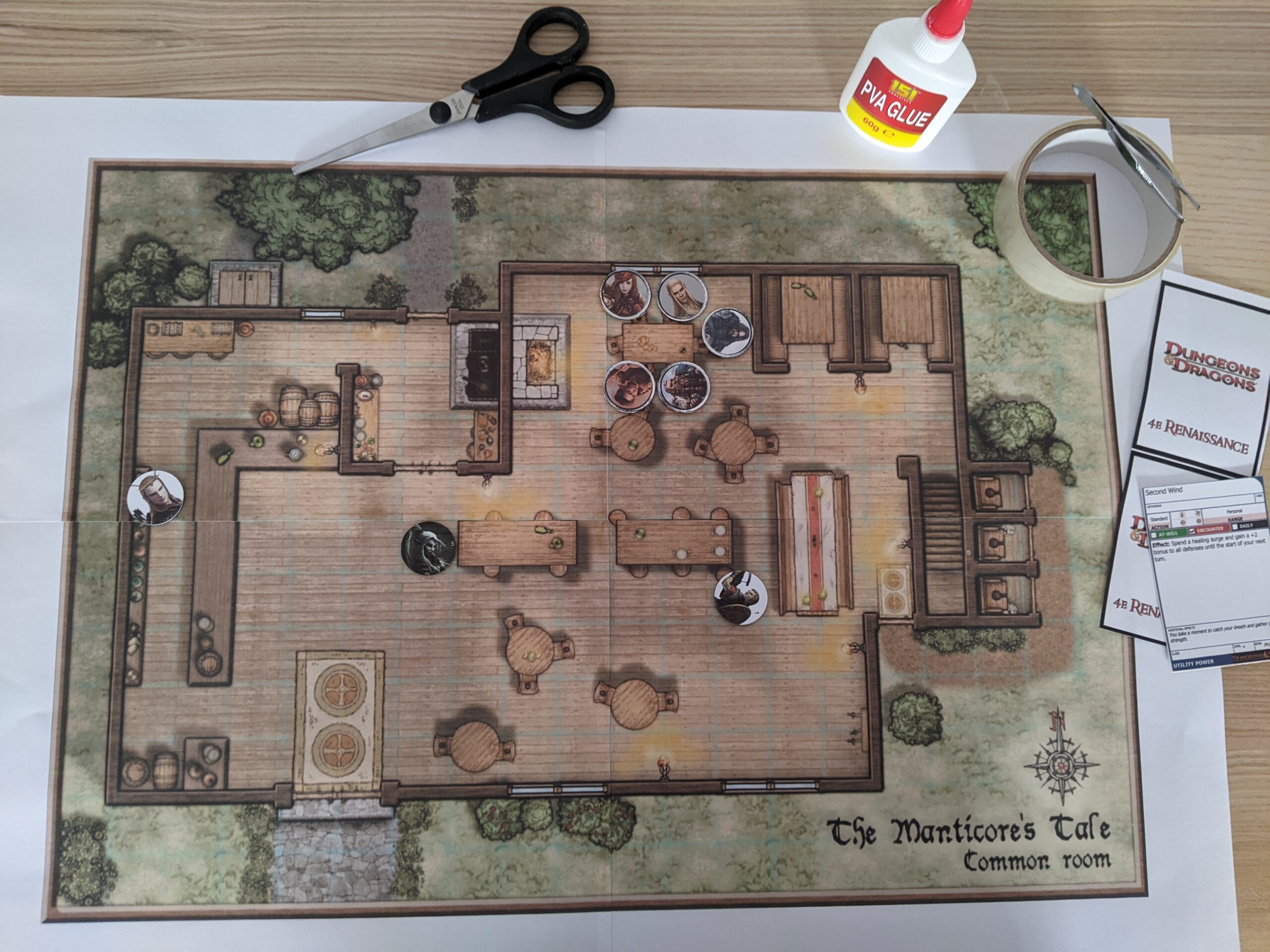
Initially, I took up a starting scenario book,  The March of the Phantom Brigade, and used that as a way of letting myself in gently. I built some tools in Role VTT to facilitate online play, and had a platform that would enable us to meet together and see each other. Role VTT is the best VTT I’ve seen for putting the players front and centre, and has just about enough to support tactical combat encounters (though that is much better serviced by most other VTTs).

I liked this adventure because it provided an opportunity for the characters to immediately change the setting. The story has them guarding a caravan of settlers, off to create a new point of light, based in an old fortification to the south. Straight away, the core theme of the 4th Ediiton of the Dragon Game was there in the concept of this scenario book. I was getting them to create something new, push back against the darkness and create a better place. The core possibilities, the central theme was right there at the start. They aso got to splat some stirges, and get spooked by undead, so there was that.

Being the Dragon Game, we had exploration and some nice combat encounters right off the bat, with some early connections and a sense of place.

The game could have ended there. I’d have fulfilled much of my goals, and whereas it wouldn’t of been a long campaign, or indeed a campaign at all, that wasn’t what I was starting with. Just this segment taught me that I loved the game, I liked how it played out, and we had a really nice group of players, with enthusiasm for more.

So, I continued the core theme of PC heroes maintaining the points of light by encouraging them West and into the marvellous mini sandbox of Harkenwold and the mini campaign set there:

From here the sense of campaign started to emerge in play. We had an adventuring company that were starting to make a name for themselves – an identity that transcended individual characters and instead looked at them as a group – really important for campaign play I think, and something that is explored more explicitely in game structure in Forged in the Dark family of games with Crew or Cell or Company sheets that themselves grow over time.

Well, I started to have this ‘noteriety of group’ as a personality in itself, going on with 4th Edition D&D.

The sense of campaign and what I wanted to achieve began to crystalise from here. Now, I would say that, once again, I would have been happy for the game to close at the end of the Reavers of Harkenwold. I felt incredibly lucky that I had preserved the interest of the players for as long as I had, but truth be told, we were enjoying each others company and the story we were telling. I signalled a season end. This enabled me to properly pause and check n with the players and gauge the mood.

We are still in play, with another season commissioned, but now I have an end goal that I’m working towards. We’ll see how it goes. I’d like to see a full Heroic arc – player character Levels 1-10 (currently nearly 6) where the characters put the entire region onto a new footing.

Nentir Vale is a northerly province of old empire. How about the ancient line of emperors returns, and not where any of the many factions of the area expects? Which faction will Sturm und Drang support and will the old power of Nerath return ,up here in the North? That’s what I want to explore, with a climactic event that will decide and answer the question.

And so, around the PCs, the factions move.

  • The line of emperors somehow preserved over the generations
  • Iron Circle Invaders from the South
  • A mad undead emperor of long ago
  • The ancient dragons of the North with their own selfish agendas
  • Ghosts of warriors past
  • A family of assassins
  • Dragonborn seeking a rekindling of their own empire of ancient times
  • Tieflings wanting the same for their own ‘Bael Turath’
  • The elves and ents of the two great forests
  • Eladrin dreams of the past and present, because they see the two as the same
  • Resurgent orc tribes in the mountains of the west

And others…

Many of these will come together, with the PCs at the centre to answer that campaign question. If I can pull it off, it will run for much of this year and will then provide a series finale.

I have a mind map on the relationships, as it got a bit involved.

Through this we are also exploring some PC backstory in play. I think a mark of a campaign is that the backstories are hooks for good play and make what you are doing personal as well as setting transformational. Backstories are only useful if they become front stories, are visible, and inform and drive actual play. Assumptions in backstory are challenged and changed by the experience at the table. In real life we write and rewrite our own narrative, to give meaning to who we are, no reason not to afford the same luxury to player characters.

I now have an ending in mind and will set to get there, whilst taking my own advice of not holding on too strong to the threads that I am weaving. Guide them into the loom, and let the process work through the pattern, to produce the finished campaign.

I am enjoying seeing threads develop where the PCs might have intervened, but because of their choices they focused elsewhere. Plot happens, but the story will take its own path. We can also only tell one main story comfortably, along with some other smaller ones. There is a sandbox element, with a sense that the world moves around them, whether they are there or not. I think that’s also a really important element to a campaign.

In all of this you might have detected a running theme? Dont hold onto your campaign too tightly. Stay loose and see how it develops, find the narrative cul-de-sacs, enjoy them, and then move on. 

A campaign is a lengthy journey. As with life, the trick I think is to enjoy every step on the way, and not fixate on the end point that will give a satisfactory conclusion to all that time that has been invested.

And with that moment of apparent lucidity, let’s recap.

Up front planning of a campaign is a good thing to do. It gives you a framework to play in, some explicit  goals that you can develop as you go and it manages players’ expectations as to the amount of time they should consider commiting to. That’s fair. If you make this explicit, I also think it is important you stick to it, with any extensions to the story, new arcs perhaps, being optional rather than expected. The actors, the players, are people with busy lives and so you proceed with them at the heart whilst recognising that stories, good stories, have good endings.

A lot of games have lengthy pre-written campaigns, adventure paths, that you simply play through, some of them are famous, some notorious. Running one of those gives you a pre-packaged campaign with many of the questions set out ready to explore. Either way, at some point, your campaign will emerge, directed or otherwise as you look to tell a story that culminates in a satisfying conclusion, a good ending, to cap off all that time in a satisfying manner.

But story and indeed plot can emerge as you go, and if everyone is having fun on the way to getting that structure in place, then all to the good! And so far, the D&D 4e game has been a great example of that and one that I may repeat, telling other stories, maybe with some or all of the current cast of people who have been gracious enough to give of their time.

And to give a fuller context, in 40 years of my gaming, this emergent campaign has been one of my best and without a shodow of a doubt the longest I have ever experienced. I wasn’t actually sure if I had one of these long and developing series in me as a DM/GM. Again this situation has emerged, and I’m jolly glad it did.

My next campaign, I think, will be the Secrets of the Sorcerer – a pre-written Modiphius Conan 2d20 mini campaign of about 12 sessions to be run in Foundry VTT. That is all packaged and ready for me to share. It’s up-front and waiting to be told.

But that is another story, and one I will tell another time. So, until the next time, hope you are well, take care and good gaming.
Posted in D&D4e, Games | Leave a comment

D&D 4e Convention Prep


Posted in Uncategorized | Leave a comment

RPGs Played in 2022 – February Update


As at 28th Feb

A slow start to this year’s gaming, but given a boost by Revelation Convention. My D&D4e game is the main game of the year as expected. As I plan to attend a good number of conventions this year, I’m hoping for a proliferation of games as I try things out.

Posted in Games | Leave a comment

Running Tribes in the Dark

 It was great to re-explore Vimary, the ruined city and home to tribal humanity in the post-apocalypse roleplaying game Tribe 8. The impetus to return came from the Quickstart of the new version of the game, powered by John Harper’s Forged in the Dark (FitD). I offered the game at our Revelation convention, which we managed to run face to face at our usual local venue. Light narrative RPGs are part of my broad and eclectic library of systems, but as per my previous post, I was having some difficulties with elements of the FitD engine.

Well, I certainly seem to be enjoying it…

The game looked quite fiddly. Action Rolls in the game follow the principle that they need to be meaningful and will have consequences of some form once the dice are interpreted. The Position (Risk) and Effect (Outcome) requires some GM setup to provde the context of each action roll, and the result has a layer of interpretation on it too. The largely narrative context for both the Position and Effect of each roll was also a bit of a turn off. Still, I could see that, even with some Progress clocks slapped into a scene, the outcome of action was going to be a lot quicker than weightier trad systems, including its Tribe 8 predecessor in the Silhouette system.

At Revelation convention, I spent the first session enjoying the gaming burble and absorbing FitD. In reality I had spent the previous week really diving in and rehearsing how I would apply the game. In FitD’s own terms, getting to grips with the system was Risky and Standard in terms of Position and Effect, with a four slice Progress Clock called ‘FitD Bollocks’. I might have made it six or eight slices to reflect the difficulty, but that is all hand wavy whim, right? For this Blog story it’s a four slicer, giving an acknowledgement of some comlexity, but not turning it into too much of a long term project. I looked at my internal character sheet and applied the Study Action, in which I have one dot. I also have the Flexible Gamer special ability which grants me an extra die on Grocking Indie Darlings. That’s my start, which in FitD is pretty good. Even one die gives you a 50% chance of succeeding, though with consequences depending on your position in the conflict.

I also had help. Craig explained his experiences in running FitD as the con was gathering, and Tanya had some handy cheat sheets for helping with Position and Effect, which at one stress cost to one of them, came together to give me an aiding die. I’m on three dice now. In play we found a one stress aiding die was a great reward for the cost, and the group worked together to support each other like any outcast Cell should.

I roll my three dice: 4,5,6. A six is the best result and I suffer no consequences for my success. With a Standard level Effect, that ticks two of the four segment clock. Great progress, but FitD is still in the fight, with its fictional hand waving and concensus powered wibbling. I make a second roll: 1,3,6. Victory! I take the 6, full success, two more final segments on the clock completed and the game succumbs with no stress or harm to me. I’ve applied the aiding die over two rolls, rather than just the one, as I wanted to affirm the advantage such good guidance gave me over the whole system wrestling scene.

In reality that is made possible either by a favourable flashback scene, or more likely by ‘pushing myself’, granting a +1 die for two stress.

Actions, like skills, are stll the foundation of the game, whatever the fiction does to your position, though I wonder if characters start with quite enough dots in them? Plus, somethings that I am used to seeing in a skill list weren’t obviously there, making me wonder if they are picked up in outther ways, perhaps in downtime.

Speaking of which, I’m conscious I only scratched the surface of the game with a one shot. Players remarked that it felt like a sandbox, primed for longer term play. I did nothing with the Cell sheet, other than giving all players an extra dot in an action of their choice. I’m pretty sure that it should have been one action that they all share, but my sense that player characters were sparsely served with actions encouraged me to open it out as a ‘you are greater, thanks to the sum of the parts’. Much of the intro game was ‘free play’, partly because the setup scene took them completely away from the primed Quest. We didn’t really have time to explore downtime, or the grinding of factional clock gears. A Community Cell check for some Stress recovery was the sum of that bit of the structure. I slipped in a Long Rest to give one Stress recovery as a cheeky nod to D&D.  

On Twitter, EvilGaz described Pathfinder 2e as sheet music precisely played, whilst FitD is fusion jazz, where you just pick up and play baby. Although I appreciate the quaity of the simile, I feel it simultaneously reinforced my sense of fictional vaguery and denigrated the freeform nature of mechanical games. Still I like jazz, and found in play a game that I could entertain with. Good news, as FitD is getting used for A¦¦state too, which I’m looking forward to. More of this system to come in my gaming I think, and may check out the hack adice for something of my own. 

Nice.

Posted in Conventions, Games, PbtA | Leave a comment

Fictional Positioning My Arse

 And with that I dive into my first go at running a Forged in the Dark (FitD) based game: Tribes in the Dark. This is a long awated return to the Tribe8 setting, which I loved and ran in the original Dream Pod 9 Silhouette based version. I have many of the books on my shelf and a clutch of the PDFs, which they have slowly been re-issuing in a remastered form.

The setting, is a post apocalypse where, in our near future, the world was overcome by entities, the Z’bri, that ravaged humanity barbarically and almost destroyed us. Where these monsters came from remains a discoverable mystery, but they are now trapped here, with the vestiges of humanity finding heralds of freedom in the Fatimas, made of dream and acreted physicality, creating the seven tribes and forging a home in the ruined city known as Vimary. The players are fallen outcasts from one of the seven tribes, children of prophecy that tell a dfferent story of the future of humanity, one that is not bound to the will of the Fatimas, one that listens to the echoes of Joshua the Ravager, the brave Fatima that was slain by an unseen hand just as he was defeating the Z’bri.

Revelation is coming this weekend, our ‘Powerd by the Apocalypse’ (PbtA) inspired mini convention, allowing also FitD and other PbtA adjacent games. Every year there is a sub-thread about what games we should allow in, to the extent that I wonder if the core premise of the convetion has had its day. One to consider. It is also noteworthy that our numbers have substantially declined this year, as many emerge from the continuing pandemic and consider whether face to face gaming is for them. We are applying full Covid-19 protocols, whatever the government thinks. I will be keeping an eye on our other convention numbers across the year and we can reflect on their viability. Revelation just made the money this year, with enough spare for teas and coffees throughout both days, so even with an attendance in the twenties, we can still get together at the Garrison and afford the main room.

I have surprised and disappointed myself by how much I have struggled with Forged in the Dark. It is everyone’s indie darling is it not? Addressing problems in PbtA that weren’t there? Fiction first gaming I can get behind, with PbtA leading the charge with Moves initiated as the table dialogue determines. Codified result outcomes mean that every roll of the dice is meaningful and worth doing. Fine.

With FitD I’m kind of Ok with the way it is setup. Position and Effect are two dimensions that the GM provides to every meaningful roll, detemining how controlled and effective the character is in undertaking the action.  This will influence consequences and outcomes, including Clock ticking, to measure success through to final victory or consequential defeat. Now, it could be that I am just working off a playtest version, without the extra support, but working out a character’s Position and Effect seems all very handwavy. Fictional Positioning my arse! Where’s the Armour Class?!

Well, not really, and I’m not scurrying back to my traditional number games just yet. In FitD you have a number of factors that can influence how to position and judge effectiveness, including Scale (how many of them are there), Tier (which relates to faction power, but dribbles onto individual opponents), Quality of items, and the fiction itself. The fiction determines a common sense take on the relative risk and likely success of the endeavour. I will, of course, give this a go. Tiers are poorly explained in the quickstart, which may be adding to my nervousness. It’s just a conversation, and the ebb and flow of the discourse will derive a posiiton and effect naturally through the shared fiction. Arse. Give me a THAC0 table.

My indie credentials are in tatters. Not only that, if I am to return to Vimary then FitD seems to be the way back. I am also ready for A¦State, which has also gone FitD. Feeling a bit ‘Desperate and Limited’ just now, but maybe it’ll click in play? Maybe. 


Posted in Conventions, Games, PbtA | Leave a comment