A side discussion on The Gaming Tavern led me to pull my crisp and largely untouched Trudvang Chronicles books off my shelf to take another look. I had been there, briefly, two years ago, but hadn’t stayed too long despite it owning the sort of rich gaming territory that I like to be in.
I went in fairly deep for the earlier Kickstarters, and so I have a wide range of books that would give years of play. They are sumptuously illustrated, with artists headlined by Paul Bonner, and including Justin Sweet, Alvaro Tapia and more, taking you to this land of wild forests, towering mountains and mist-laced vales. The early medieval stage is inspired by Norse and Celtic mythology, with cultural touches from further afield. It’s a land full of danger and adventure, a place that I want to get to the table in some way, even if we are talking a convention one shot (or perhaps a weekend longcon).
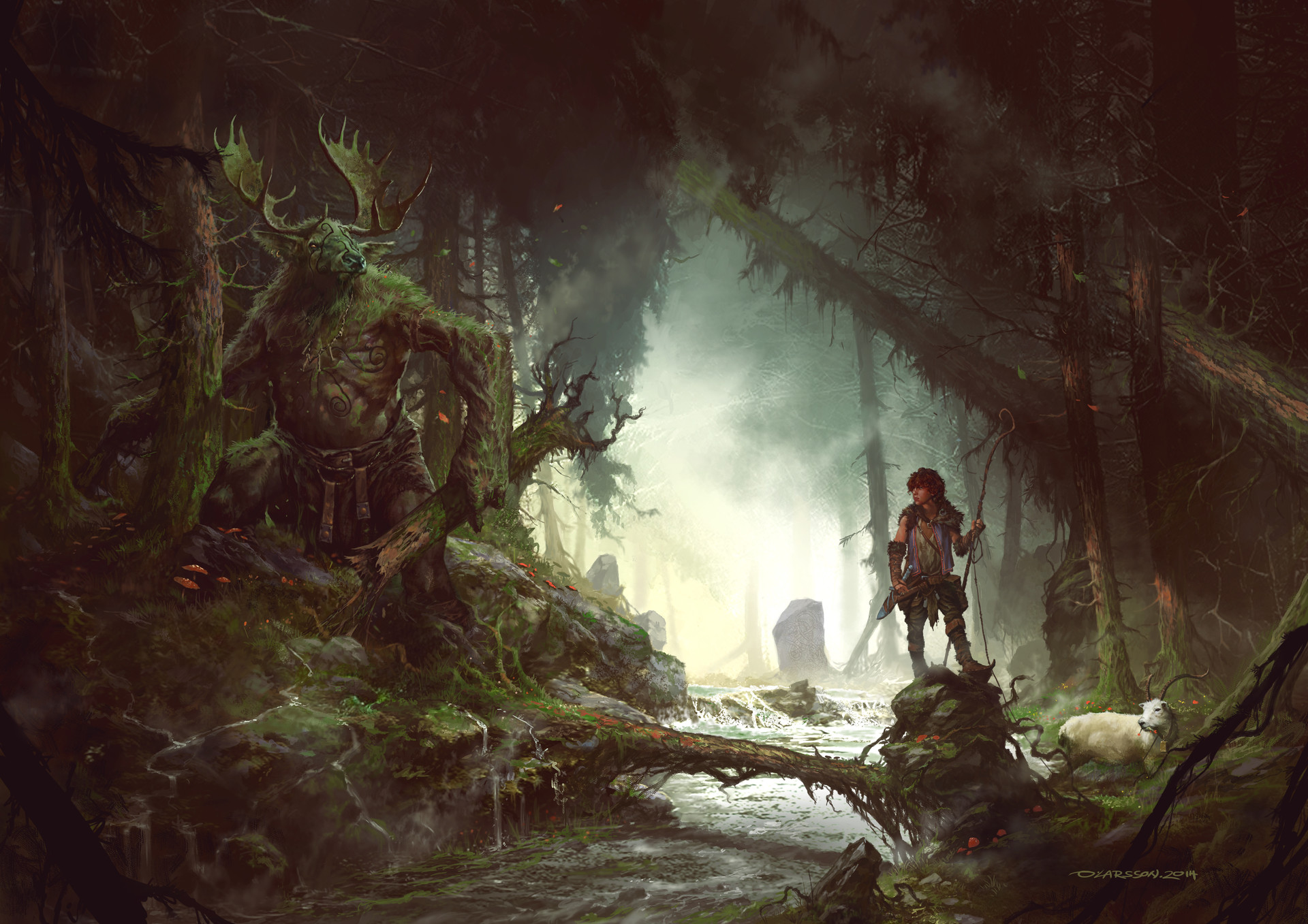 |
| My computer wallpaper right now. |
The game has existed for some time in earlier editions, named Drakar och Demoner: Trudvang in the original Swedish. What we have is the 8th incarnation of the Drakar och Demoner franchise, currently produced by Riotminds, though this is about to change. Returning to the system, reminded me that its complexity was a major hurdle to the game’s easy adoption. However, once you punch through the crunch, there’s a really nice tactical game that places its protagonists at the vulnerable end of survivability. Player Characters have 30ish Body Points and weapons do 1d10 and exploding on high numbers. Crunching blows are altogether possible, with a few points of armour soak there to keep you somewhere a bit higher on the death spiral.
The major complexity, in what otherwise is a relatively strightforward D20 roll equal or less than your skill value, is in combat. You combat skills, disciplines and specialties all provide their value as a ‘combat capacity’ of points that can either be spent flexibly or fixed on certain things in a round. In essence you decide from that pool what your character will do and focus on. The tactical situation in the round can strongly influence the balance of attack and defence, so you are always left with options. That tactical balance applies to all the adversaries as well, which cognitively limits the number protagonists in a combat encounter. Pre-defined spend combos on your points speeds things up and gives a default to fall back on. With these defined up front, you can always ‘go with the combo’ and not worry about the flexible point spend each round. Initiative is rolled each round, influenced by ‘Traits’, armour and your disciplines and specialties. Changes of planned action can also change intiative dynamically in the round.
Magic and powers of the gods swirl around the game too, with setting cultures affecting how they are viewed and accepted. You’ll get one view in the heart of the traditional Stormlands and another in Mittland.
I think I like the system a lot. Actual play will tell me more. I’m even prepared to run it at a convention and get a group of players into it. I really don’t make things easy on myself. The recent 5e adaptation holds little personal appeal, but I can see it being an approachable way into the setting.
I had hoped for a Foundry VTT system, but alas no. Roll20 has a character sheet and I have created a tracking sheet in PlayRole, which is where I think I will play the game online. The freely provided character sheet is not form fillable, which was a bit of a blow. So, I have fired up my trusty Affinity suite and am creating a fillable sheet in Publisher to export and print for play. That feels a bit serious. I think I will be getting this to a table, virtual or in the real, or possibly both.
Others have said that the system is too fiddly and clunky, and I can see why. My sense of it is a good crunch game, giving you choices in the heat of battle, with heroes that are at the Runequest end of simulation, facing ancient, powerful, and deadly foes.
I’ll let you know how I get on.